Identity and access management built for AI agents and machine identities
Argus governs the complete lifecycle of non-human identities — registration, AI-generated roles and entitlements, approval, provisioning, gateway enforcement, monitoring, and revocation — across databases, SaaS platforms, APIs, repositories, and MCP servers.
- Category
- NHI IAM
- Deployment
- SaaS / Self-hosted
- Telemetry
- Real-time
- Integrations
- 96+
[ Overview ]
AI agents are no longer simple assistants; they execute real actions against real systems. Argus treats every agent, service account, bot, and workload as a first-class identity with governed access, controlled capabilities, and a fully auditable lifecycle — instead of a static credential pasted into a config file.
NHI Registration
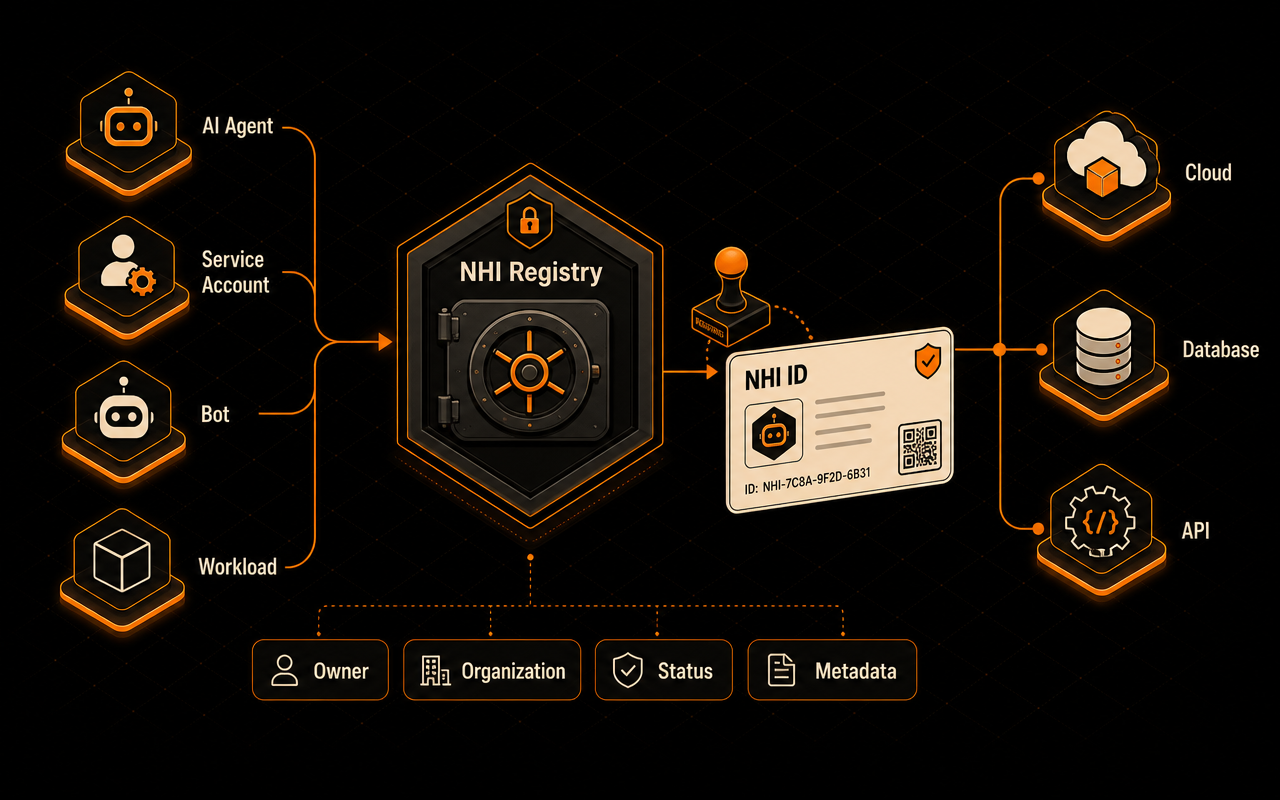
Register AI agents and machine identities as managed NHIs with a unique name, description, NHI type (AI agent, service account, bot, application, workload), human owner, organization, status, and metadata. Argus validates uniqueness, owner, and organization, issues an NHI ID, and maps the identity to resource-specific accounts — establishing a central identity-to-resource relationship.
Resource Registration and Management
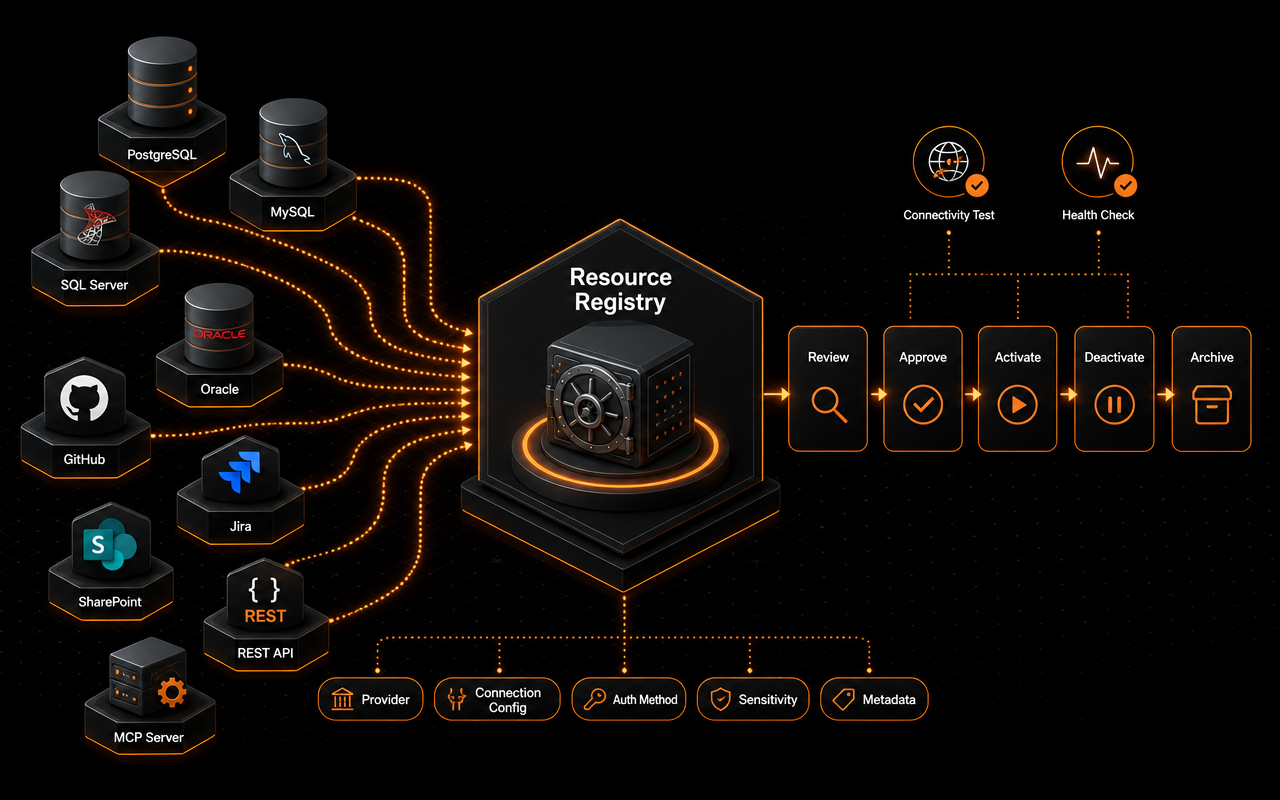
Register PostgreSQL, MySQL, SQL Server, Oracle, GitHub, Jira, SharePoint, REST APIs, and MCP servers with provider, connection configuration, authentication method, sensitivity level, and metadata. Argus tests connectivity, verifies existence, runs health checks, discovers metadata, and moves each resource through review, approval, activation, deactivation, and archival.
AI-Generated Roles and Entitlements
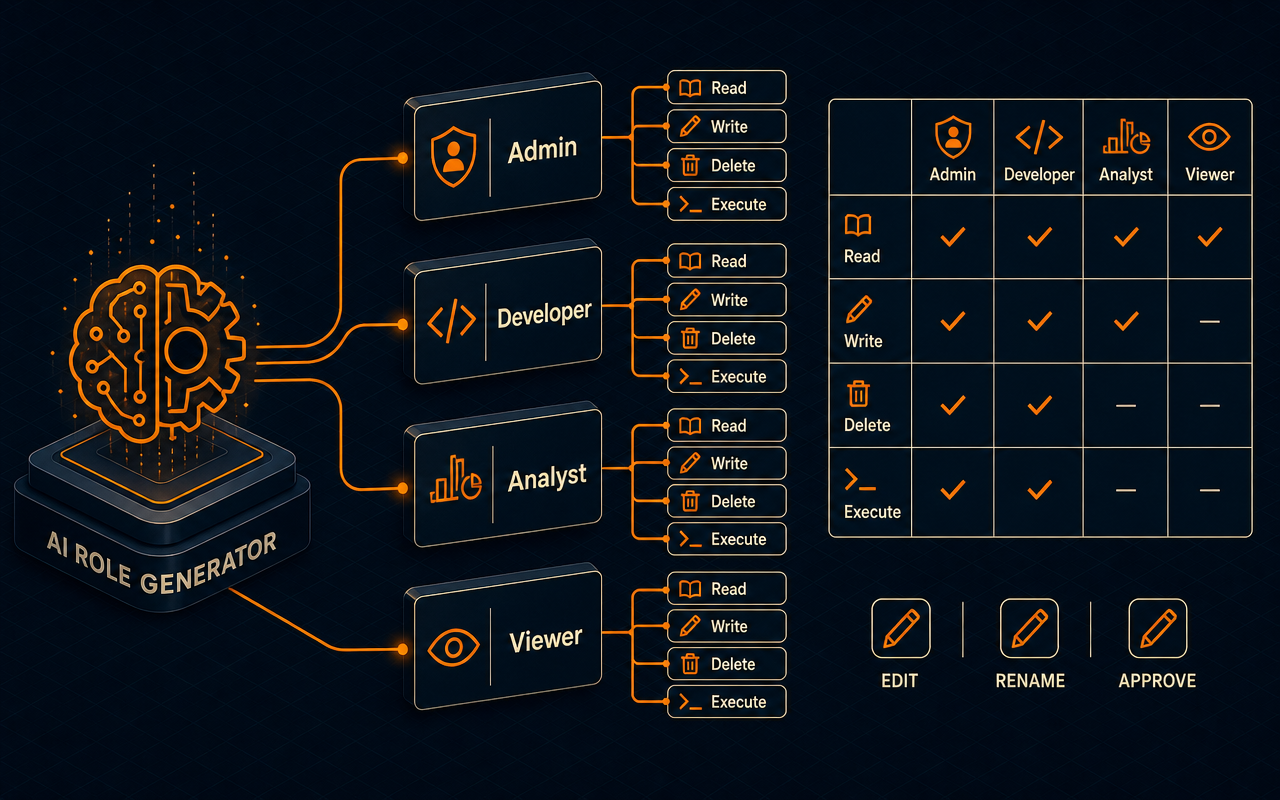
When a resource is registered, Argus generates the access model for you: resource-specific roles (for example PostgreSql_Admin, PostgreSql_Developer, PostgreSql_Analyst, PostgreSql_Viewer), granular entitlements (Read, Write, Delete, Execute), and the role-to-entitlement mappings that connect them. The generated model is never blindly accepted — teams can add, edit, rename, or delete roles and entitlements and adjust descriptions and scopes before approval.
Access Requests with Automatic Entitlement Resolution
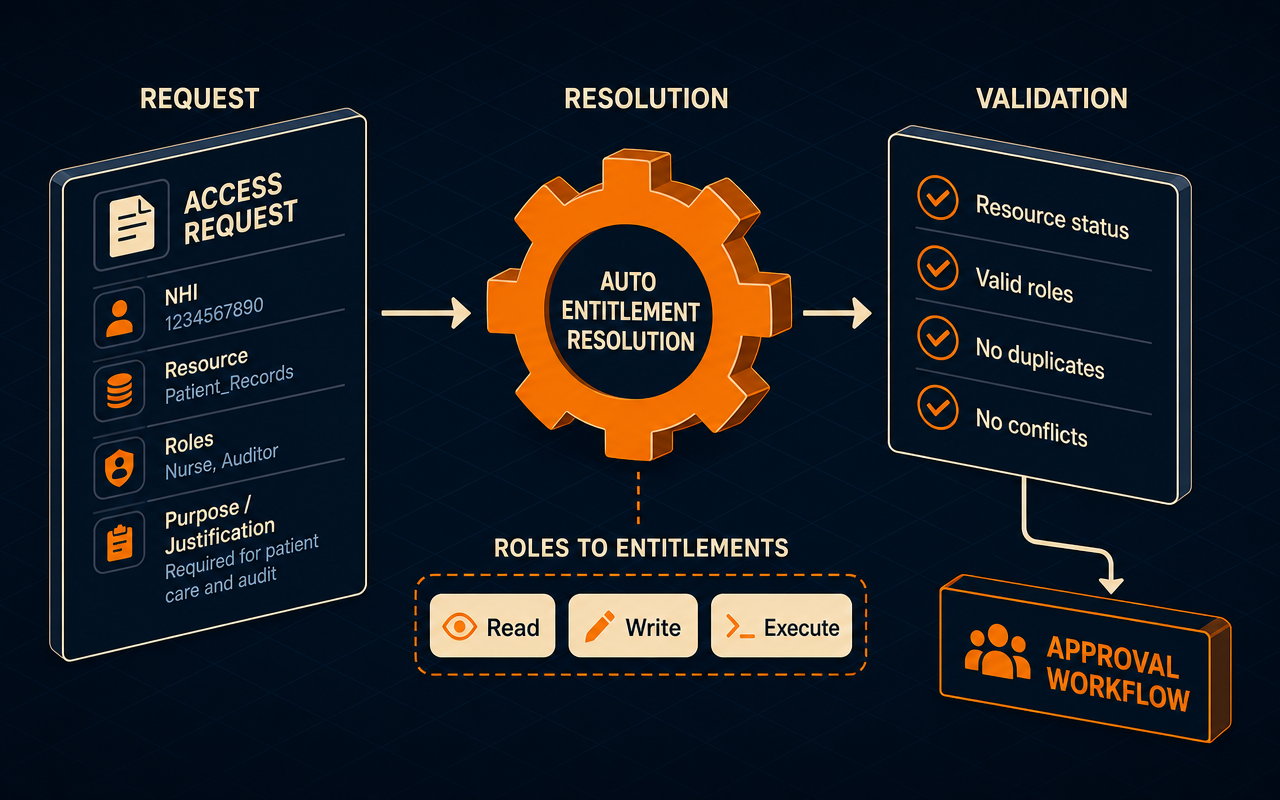
An owner selects the NHI, the target resource, and the roles required, with a purpose and justification. Argus automatically resolves the underlying entitlements from the role mapping, so nobody hand-picks low-level privileges. Every request is validated for resource status, valid roles and entitlements, and duplicate or conflicting access before it enters the approval workflow.
Approval Workflow and Provisioning Engine
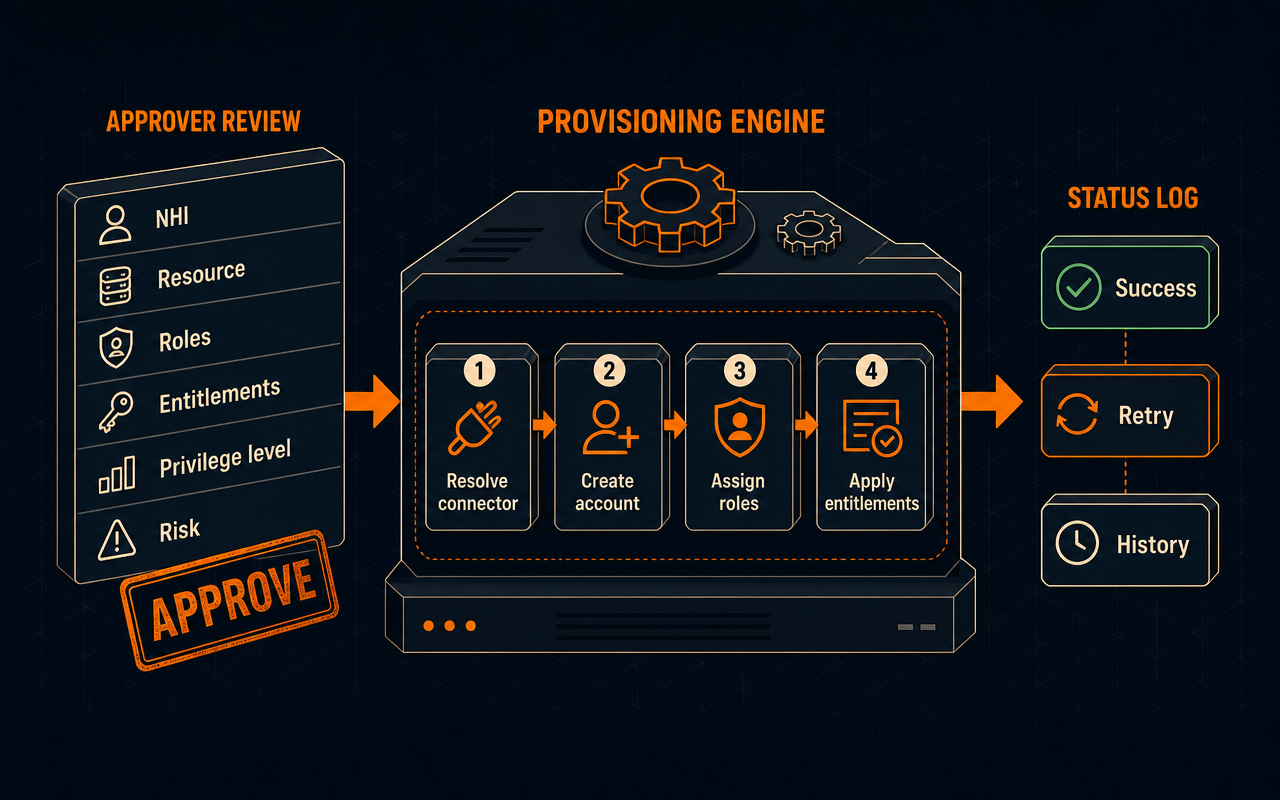
Approvers see the NHI, resource, roles, entitlements, privilege level, risk classification, and justification in one view. Once approved, the Provisioning Engine resolves the connector, creates the resource account, assigns approved roles, applies the resolved entitlements, and records provisioning status and history — including retries and failures.
Connector Framework
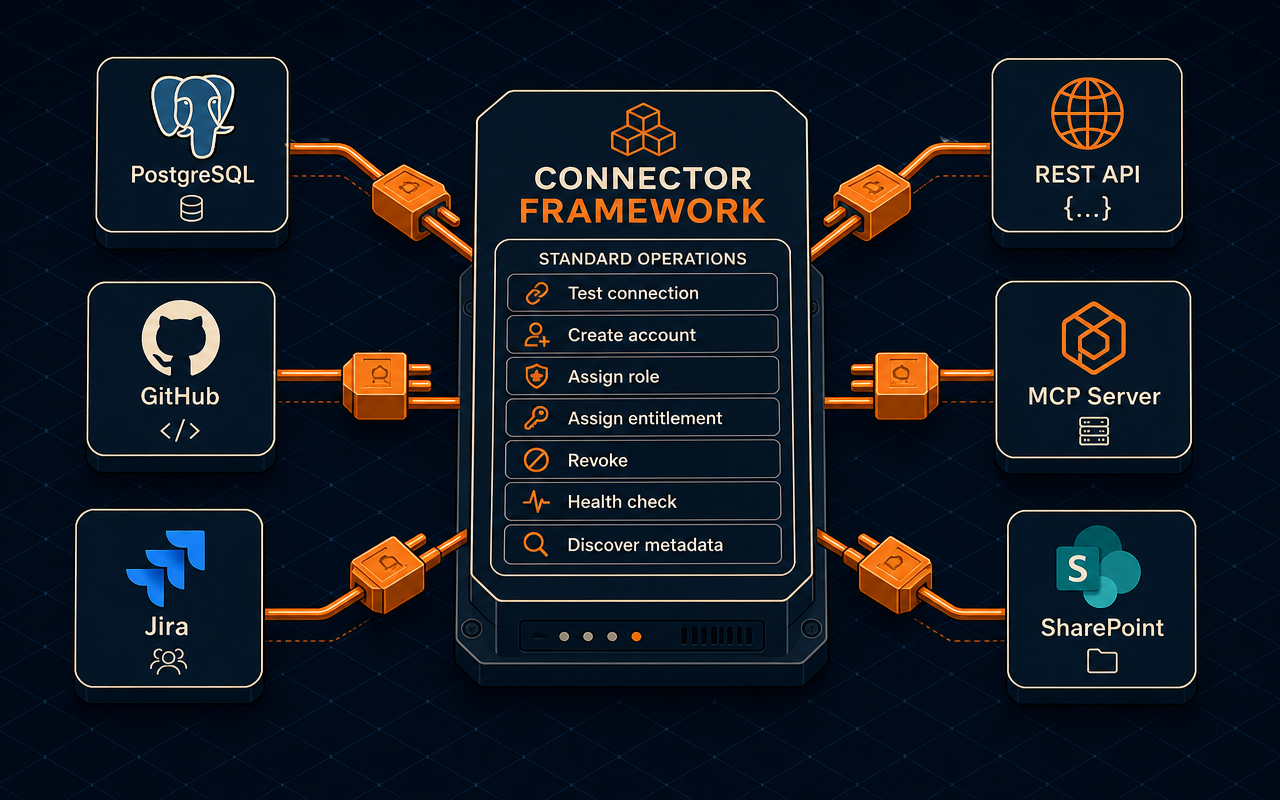
A pluggable connector layer abstracts the differences between resources, providing consistent operations for connection testing, account creation and update, role assignment and removal, entitlement assignment and removal, revocation, health checks, and metadata discovery — so adding a new resource type does not change the governance model.
Gateway Enforcement and Resource Plugins
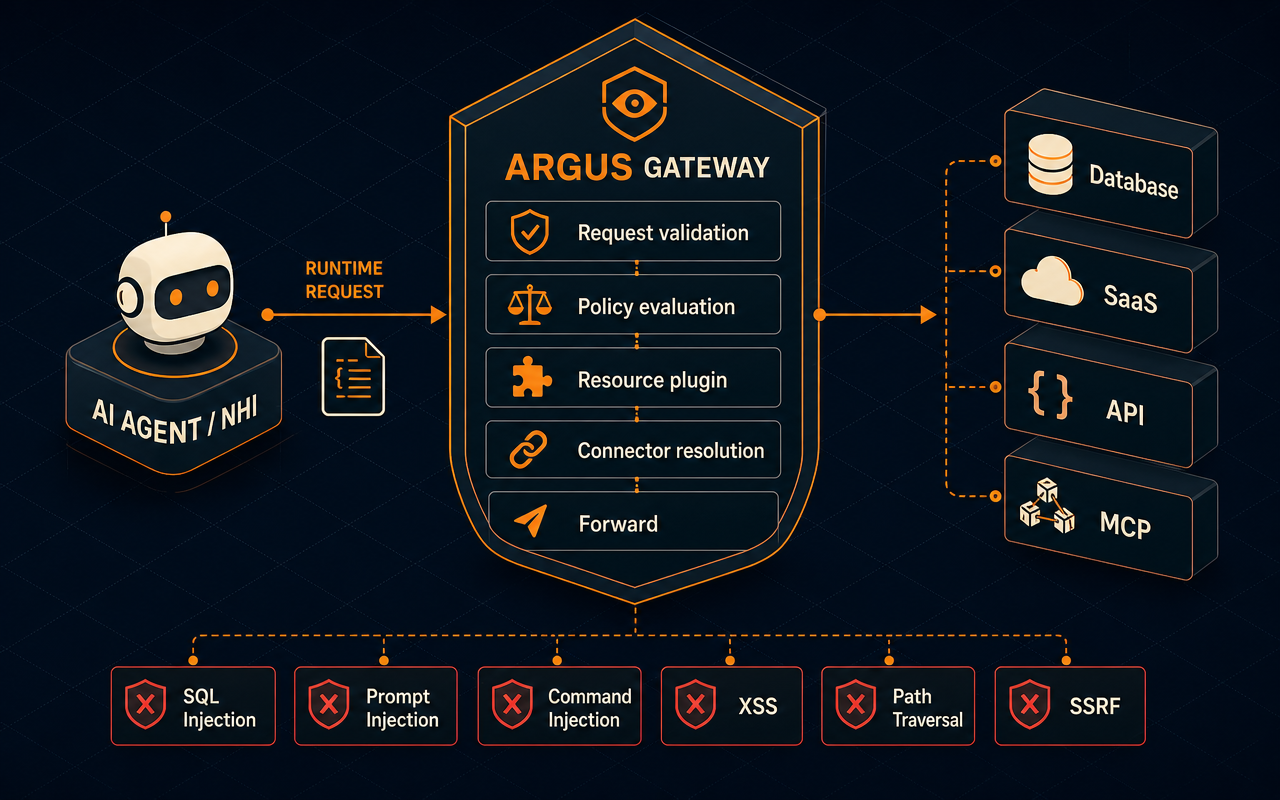
Every runtime request from an NHI passes through the Argus Gateway: request validation, policy evaluation, resource-specific plugin processing, connector resolution, and forwarding to the target. Security validation covers SQL injection, prompt injection, command injection, XSS, path traversal, and SSRF, alongside business validation of supported operations — before the request ever reaches the resource.
Monitoring, Audit, and Reporting
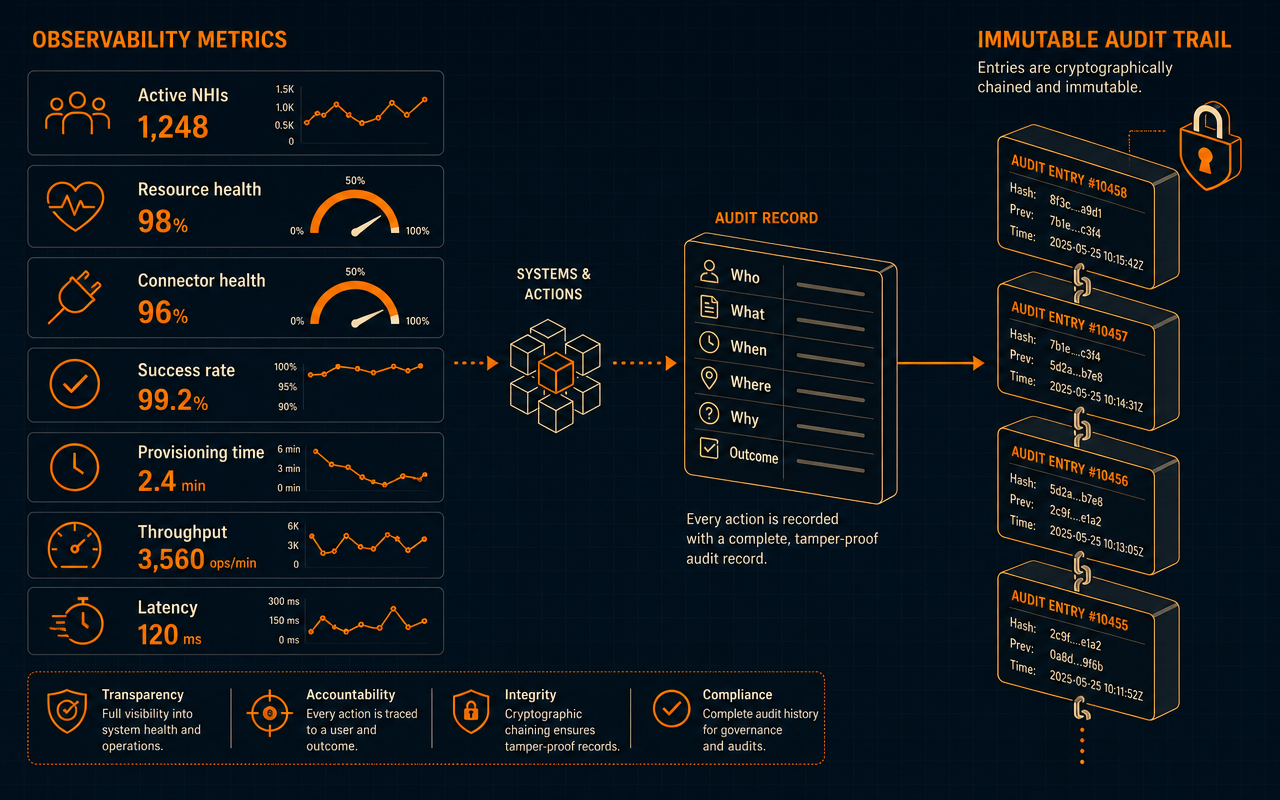
Track NHI, resource, connector, provisioning, and gateway metrics — active and inactive identities, resource and connector health, success and failure rates, provisioning time, retries, throughput, and latency. Audit records capture who initiated an operation, which NHI was involved, the target resource, the policy decision, and the result, so you can trace who, what, when, where, why, and outcome for every significant event.
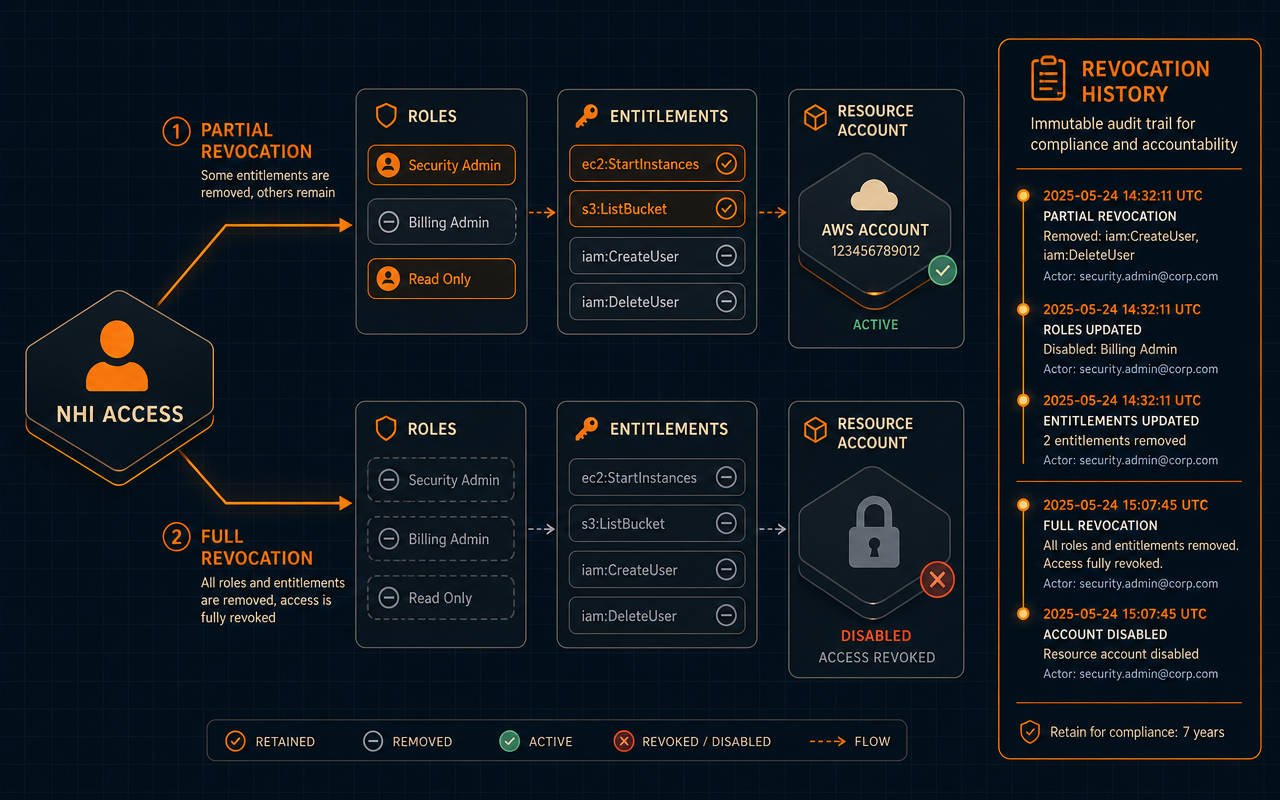
Access Modification and Revocation
Access changes as work changes. Argus supports partial revocation (remove specific entitlements or roles) and full revocation (remove entitlements and roles, then disable or delete the resource account), with complete revocation history retained for audit and compliance.
Why Argus for Non-Human Identity Management
AI agents should not simply have credentials. They should have identities, governed access, controlled capabilities, and an auditable lifecycle. Argus brings all of that together in one platform.
Give your AI agents identities, not credentials
See how Argus registers, governs, provisions, enforces, and revokes access for non-human identities across your enterprise resources.
[ Related capabilities ]
[ INTEGRATIONS ]
Third-Party Tool Integrations
Argus connects natively to CrowdStrike, SentinelOne, Microsoft, Okta, and 95+ other tools — orchestrating detection, investigation, and response across them from a single platform.
[ DETECTION ]
Real-Time Threat Detection
Argus analyzes behavior patterns, monitors activity in real time, and provides context-rich alerts to stop threats at the source.
[ EXPOSURE ]
Vulnerability Management
Argus continuously scans your environment, simulates real-world attacks, and guides your team with actionable remediation to eliminate risks before they're exploited.
Ready when you are
See Argus in your environment
Talk to an engineer for a 30-minute working session and see how Argus converges detection, response, and exposure management into a single platform.